
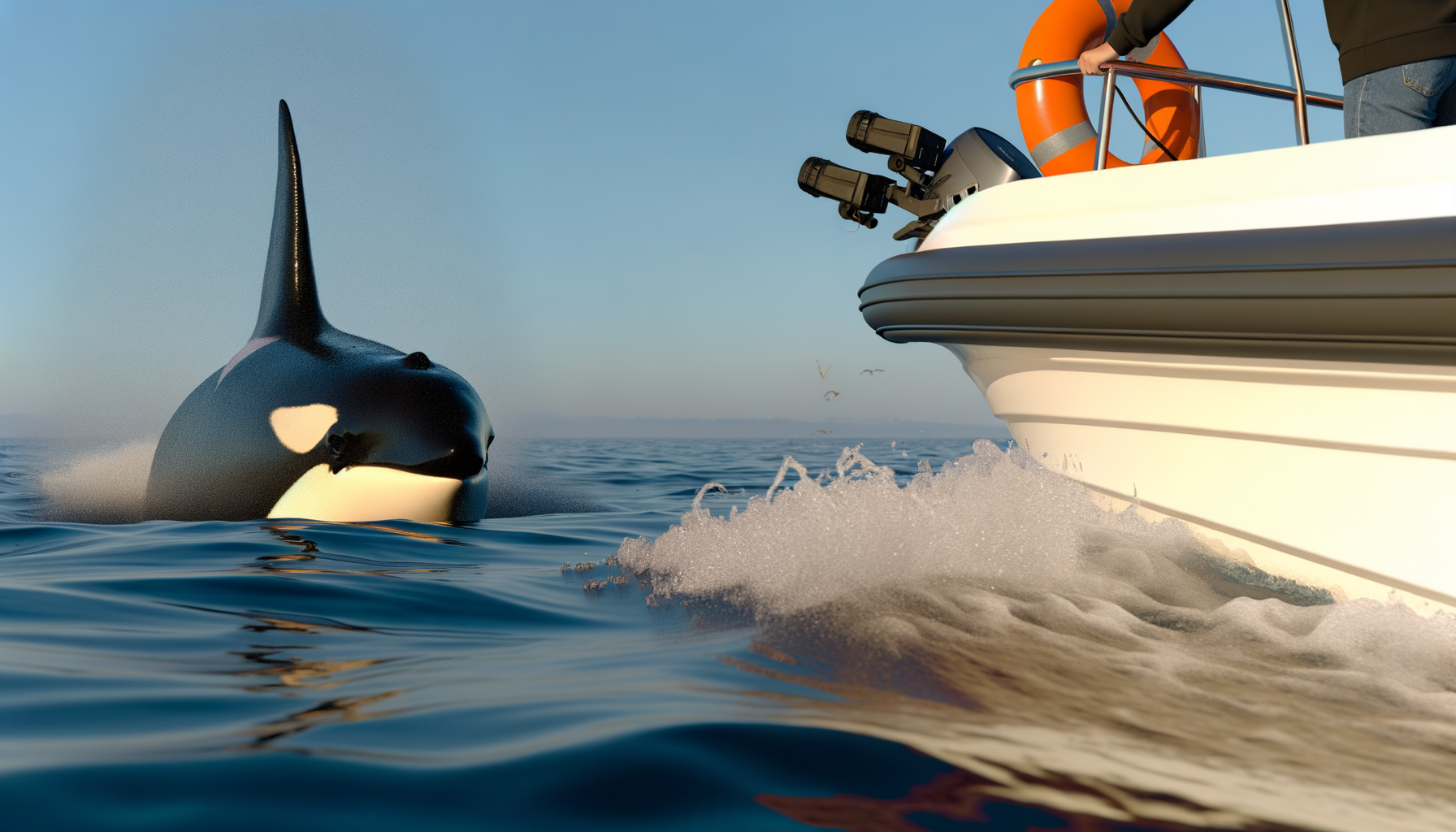
Authorities across several coastal regions are raising alarms amid a troubling trend: increased reports of aggressive behavior by orca whales toward boats. In incidents that are intensifying both in frequency and potential danger, pods of **orca whales** have begun exhibiting unusual and coordinated actions — ramming sailboats, damaging rudders, and closely shadowing vessels without clear provocation. These encounters are not only mystifying marine biologists but also prompting renewed calls for vessel owners and maritime crews to be vigilant, informed, and cautious when navigating orca-populated waters.
Typically praised for their intelligence and majestic presence, orcas — also known as killer whales — appear to be adopting behaviors that researchers describe as learned and possibly passed between pods. The phenomenon, being closely monitored in regions like the Iberian Peninsula and the Strait of Gibraltar, has prompted maritime authorities to release public advisories and strengthen guidance on vessel movement through certain waters. Though no fatalities have been reported, the damage to boats and psychological toll on their crews are mounting, highlighting the need for both understanding and precaution going forward.
Key facts at a glance
| Aspect | Details |
|---|---|
| Issue | Unusual aggressive behavior from orcas targeting boats |
| Hotspots | Iberian Peninsula, Strait of Gibraltar, and nearby Atlantic waters |
| First Reports | Mid-2020, with notable increase in 2023–2024 |
| Vessels Affected | Primarily sailboats and yachts under 15 meters |
| Damage Reported | Broken rudders, dented hulls, dismasting |
| Advisories Issued | Navigation precautions and recommended detours |
| Public Response | Increased concern among private sailors |
What changed this year
While orcas have occasionally interacted with vessels in the past, experts say the 2024 spike in hostile encounters represents a significant behavioral deviation. The orcas have been targeting vital parts of the boat, particularly **rudders**, which leaves the vessels unable to be properly steered. Reports from mariners describe encounters where groups of two to six orcas approach slowly, then begin a concerted effort to disable the boat — an action marine authorities say indicates immense intelligence and possible social learning within pods.
Earlier years already hinted at this trend, but in the past twelve months, the frequency and severity have escalated. The increased aggression is mostly centered on smaller vessels traveling through established migratory lanes where orcas may be hunting or navigating. One hypothesis offered by researchers is that a few juvenile orcas started experimenting with these interactions and the behavior spread among pods via mimicry and play-learning — a common trait among these social animals.
Why orcas may be showing aggression
Experts are divided on the **underlying motivations** for this disturbing new behavior. One theory suggests that these orcas experienced traumatic encounters, such as entanglements with fishing gear or collisions with vessels, and have since developed what scientists call an “adversarial association” with boats. Alternatively, the attention to rudders may stem from curious or playful behaviors that evolved into more destructive patterns without clear aggression as the root cause.
Another possible explanation is environmental disruption. With increasing marine noise pollution, warming ocean currents, and reduced fish stocks due to overfishing, orcas may be feeling stressed or disoriented. “We can’t discount the idea that these are intelligent creatures responding to challenging stimuli in unexpected ways,” one marine biologist noted. Researchers continue to study whether certain pods are more likely to engage in these behaviors and what specific stimuli may trigger them.
We are seeing what could be described as a cultural shift within certain orca groups, particularly along the Iberian coast. This behavior appears coordinated and potentially learned, not accidental.
— Dr. Maria Cardenas, Marine Behavioral Ecologist
Areas of highest concern for sailors
The orca encounters are far from random. Maritime records and eyewitness accounts show a clear pattern linked to orca migration routes, typically near the **Strait of Gibraltar** and the **northwestern coast of Spain and Portugal**. Sailing vessels under 15 meters in length are the most likely to be approached — and possibly damaged — during encounters, though larger craft aren’t immune either.
Authorities have issued official recommendations urging smaller vessels to avoid lingering in known orca zones, especially during summer and early fall when whale presence is at its peak. Additionally, sonar and engine noise may be aggravating, so captains are advised to reduce underwater noise where safe and feasible. A growing number of sailors are now using apps and community forums to share orca sighting data in real-time.
Recommended actions for sailors and maritime professionals
Based on guidance from marine authorities, captains and crews are urged to adhere to several precautionary measures when sailing through high-risk zones. If orcas are spotted nearby:
- Reduce speed and avoid sudden turns
- Disengage autopilot and steer manually
- Avoid trying to outrun the whales — stop if safe
- Stay quiet and reduce underwater noises
- Alert nearby vessels on open marine communication channels
- Record GPS coordinates and encounter details for reporting
Post-encounter, sailors should check for underwater damage immediately, especially to the rudder and stern. Authorities have also set up reporting platforms for all incidents, helping researchers map and understand the behavior patterns more systematically.
Winners and losers in the current situation
| Winners | Losers |
|---|---|
| Orca researchers gaining valuable behavioral insight | Private and recreational sailors facing increased risks |
| Marine tech developers offering GPS alert tools | Insurance companies seeing higher claims related to vessel damage |
| Environmental watchdogs raising awareness on ocean health | Regional maritime tourism in affected areas |
Could this be temporary behavior?
Experts caution against making assumptions, but many believe this behavior may pass, especially if it is being driven by a few key individuals within the orca pods. In animal societies known for mimicry, such behaviors may amplify for a time before stabilizing or declining. However, if future generations inherit or reinforce these interactions, they could become a persistent issue.
Close monitoring over the next few seasons will be crucial. Multi-national research initiatives are already underway, and collaboration between marine science institutions and maritime safety bodies is intensifying to ensure fast data sharing and effective response protocols.
It’s too early to know if this is the new normal or a passing behavioral fad. Either way, boaters need to be prepared.
— Capt. Daniel Rosales, Atlantic Coastal Watch
FAQs: Aggressive Orca Behavior Toward Boats
Why are orcas attacking boats?
Researchers believe it could be learned behavior sparked by past trauma or curiosity about rudders. Environmental stress and social mimicry may also play roles.
Are certain types of boats more at risk?
Yes. Smaller sailboats and yachts under 15 meters are most frequently involved in these incidents, particularly in high-risk areas.
What should I do if I see orcas near my vessel?
Slow down, stay calm, disengage autopilot, and minimize noise. Avoid sharp movements and do not try to flee at full speed.
Where are these incidents most commonly reported?
So far, the majority of reports come from waters off Spain and Portugal, especially near the Strait of Gibraltar.
Is this a widespread global issue?
Currently, the reports are mostly localized to Europe’s Atlantic coast, but monitoring is expanding globally to detect similar behavior elsewhere.
Could this behavior endanger human life?
No deaths have occurred thus far, but physical damage to boats and psychological distress among crews are significant.
What are authorities doing to address the situation?
They are issuing navigation advisories, collecting incident data, encouraging research, and working with sailors to improve awareness and safety protocols.
Is there a specific season when incidents increase?
Yes, summer and autumn tend to see more interactions, likely due to migration and feeding patterns.