
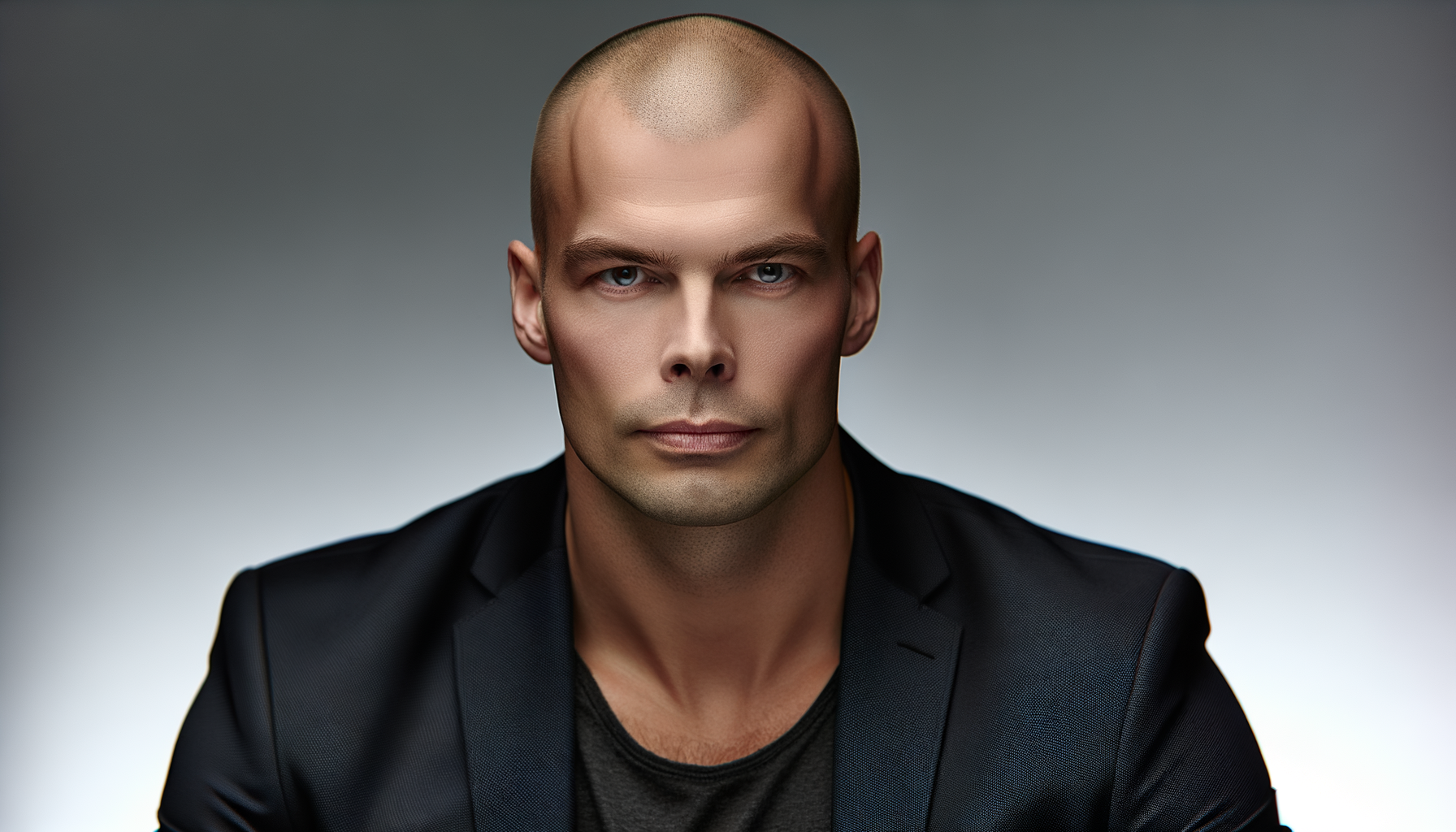
In a world where personal image often intersects with psychological perception, a seemingly simple grooming decision — shaving one’s head — can have a profound impact. An increasing number of men are shaving their heads completely, not as a last resort due to hair loss, but as a deliberate power move. More than just a style statement, this choice is altering how these individuals are perceived by others and even how they perceive themselves. The research is compelling: men who go for a clean-shaven scalp often report a sudden surge in how dominant, confident, and assertive they are perceived by their peers.
Psychological studies and personal testimonials alike suggest that baldness — when it’s intentional — signals control, confidence, and even leadership. This growing trend redefines traditional beauty standards and empowers men to embrace boldness, both literally and figuratively. Unlike the emotional toll that involuntary balding may inflict, the purposeful act of head shaving is aligning with concepts of strength and authority — reshaping not only appearances but perceptions across industries and social groups.
Summary of the benefits and perceptions of men shaving their heads
| Aspect | Impact or Observation |
|---|---|
| Perceived Dominance | Significantly increased as rated by peers |
| Confidence Levels | Self-reported spike in confidence post-shaving |
| Professional Perception | Seen as more assertive and capable leaders |
| Aesthetic Appeal | More positive when baldness appears intentional |
| Psychological Control | Feeling of reclaiming power over appearance |
Why shaving your head is more than just a style choice
The decision to shave one’s head taps into deeper psychological drivers than most grooming habits. Studies have indicated that individuals with shaved heads were consistently rated as more dominant than those with full heads of hair. This old stereotype of baldness being associated with aging or illness is rapidly disappearing, replaced by a cultural impression of strength and control — particularly when the bald look is embraced willfully.
This perception holds especially true in professional environments. Bald men are increasingly being viewed as leaders, perhaps because the choice to shed hair is viewed as symbolic of shedding vanity in favor of focus and self-assuredness. Moreover, deliberately shaving the head also eliminates the insecurity or ambiguity surrounding receding hairlines, sparking a shift in the energy a man projects when facing social or business interactions.
The science behind perceived dominance
A study conducted with participant groups revealed that men with shaved heads were seen not only as more dominant but also as larger and stronger. This likely ties into evolutionary biases — where a lack of hair can simulate the rugged, no-nonsense appearance of warriors or athletes. Participants interpreted baldness, especially when voluntary, as a signal of determination and confidence, qualities strongly associated with dominance.
The effect is so pronounced that in some trials, even digitally altered photos of men, where hair was removed, showed a noticeable increase in perceived dominance when compared side-by-side with their original image. Importantly, this correlation weakens when baldness appears involuntary or unkempt, solidifying the belief that choice is the catalyzing factor.
“I noticed a shift in how people interacted with me — more eye contact, more deference in meetings. It’s like I stepped into a more confident version of myself.”
— Jamal Peterson, Corporate Trainer
Breaking the stigma around baldness
For decades, male baldness was seen as something to hide or avoid — comb-overs, hair implants, or caps were all part of the strategy to maintain a youthful appearance. But the narrative is now changing. In today’s image-driven society, shaving it all off is becoming a preferred alternative to clinging to diminishing hairlines.
By choosing baldness instead of enduring a slow, passive loss, men are flipping the script. This not only redefines societal standards but also encourages younger generations to reconsider their relationship with self-image and aging. In essence, what was traditionally a point of self-consciousness is becoming a badge of honor, confidence, and power.
Public figures influencing the bald trend
Several high-profile figures have helped normalize and even glamorize the bald look. From actors like Dwayne “The Rock” Johnson and Jason Statham to athletes like Michael Jordan and UFC Champions, the clean head has become synonymous with power, minimalism, and masculinity. These role models contribute not only by flaunting the look but by embodying the characteristics it reflects: confidence, control, and presence.
Experts believe that these public personas have contributed significantly to reshaping how baldness is viewed culturally. Unlike previous generations that may have linked baldness to aging or lack of vitality, today’s bald icons are strong, successful, and culturally relevant.
Psychological benefits of embracing shaved head
Shaving one’s head isn’t just cosmetic; it also has subtle mental health benefits. For many, the act of shaving off their hair becomes metaphorical — a clean break from insecurity, indecision, or societal pressure. Several men reported feelings of liberation, clarity, and self-ownership post-shave.
“I felt like I took control for the first time. Instead of watching more hair fall every day, I took action. That choice reflected in how I handled other parts of my life too.”
— Eric Silva, Life Coach
Additionally, the clean-cut look often requires less grooming and care — offering an unexpected sense of freedom and simplicity in daily routines. This simplification can even carry over to wardrobe choices and self-expression. With less worry over hair loss or bad hair days, the focus shifts more onto self-confidence and purpose.
The role of environment and social influence
Despite the benefits, the decision to shave one’s head doesn’t happen in isolation. Cultural context, peer influence, and even the workplace can play a significant role. In trendy urban circles or innovator-heavy industries like tech or design, bald heads are much more accepted — even expected in some cases. But in more traditional or conservative environments, the perception may still lean toward conventional grooming expectations.
This brings attention to how pivotal peer validation remains in grooming choices. Interestingly, the study suggests positive responses from others post-shave actually help reinforce the internal sense of confidence. In a way, the feedback loop between external recognition of dominance and the internal emotional shift works symbiotically.
Who benefits the most from shaving their heads
While any man can choose to go bald, several groups may benefit more immediately from the psychological and social effects:
- Men beginning to experience a receding hairline
- Those working in leadership or forward-facing roles
- Fitness professionals or athletes
- Individuals in fashion or media industries
- Men seeking to project confidence and maturity
The impact may also vary based on head shape, skin tone, and grooming habits post-shave, with more symmetrical features typically translating well to this clean look. However, confidence and self-carry often outweigh aesthetics in shaping public perception.
Is this trend here to stay?
Given the increasing visibility of intentionally bald public figures and the shifting cultural norms, it’s reasonable to state that this trend is not only sustainable but likely to expand. As more men opt to go bald not out of necessity but as a self-defining choice, the stigma around hair loss is steadily eroding. It’s a demonstration of how style, psychology, and self-empowerment are converging in modern masculinity.
Ultimately, shaving one’s head — once a feared milestone — is becoming a power statement, a symbol of control, and a fresh beginning. And in this transformation lies the deeper truth about evolving male identity in today’s world.
FAQs about the psychological impact of shaving your head
Does shaving my head change how people perceive me?
Yes, studies show that men with shaved heads are often perceived as more dominant, assertive, and confident by others.
Will people think I’m going bald if I shave my head?
While some may assume it’s due to baldness, the key difference lies in presentation. A clean, intentional shave often projects strength rather than necessity.
Is a shaved head suitable for professional settings?
Absolutely. Many business leaders and professionals have adopted the bald look, often perceived as modern and strong if maintained neatly.
How does shaving my head affect my own confidence?
Many men report feeling more in control and focused after shaving their heads, reducing anxiety around receding hairlines or hair grooming.
Does head shape matter for a shaved look?
While some head shapes may enhance the aesthetic appeal, confidence and grooming play crucial roles in how the look is received.
Is there a best age to consider going bald?
There’s no fixed age. Men of all ages opt to shave their heads — the decision often comes down to personal comfort and presentation.
Can shaving my head help with hair anxiety?
Yes, it removes uncertainty and distress related to hair loss, allowing many to shift focus to more empowering aspects of self-image.
Are there any downsides to shaving your head?
Minor considerations include frequent shaving to maintain the look and sun protection, but most men find these manageable trade-offs.