
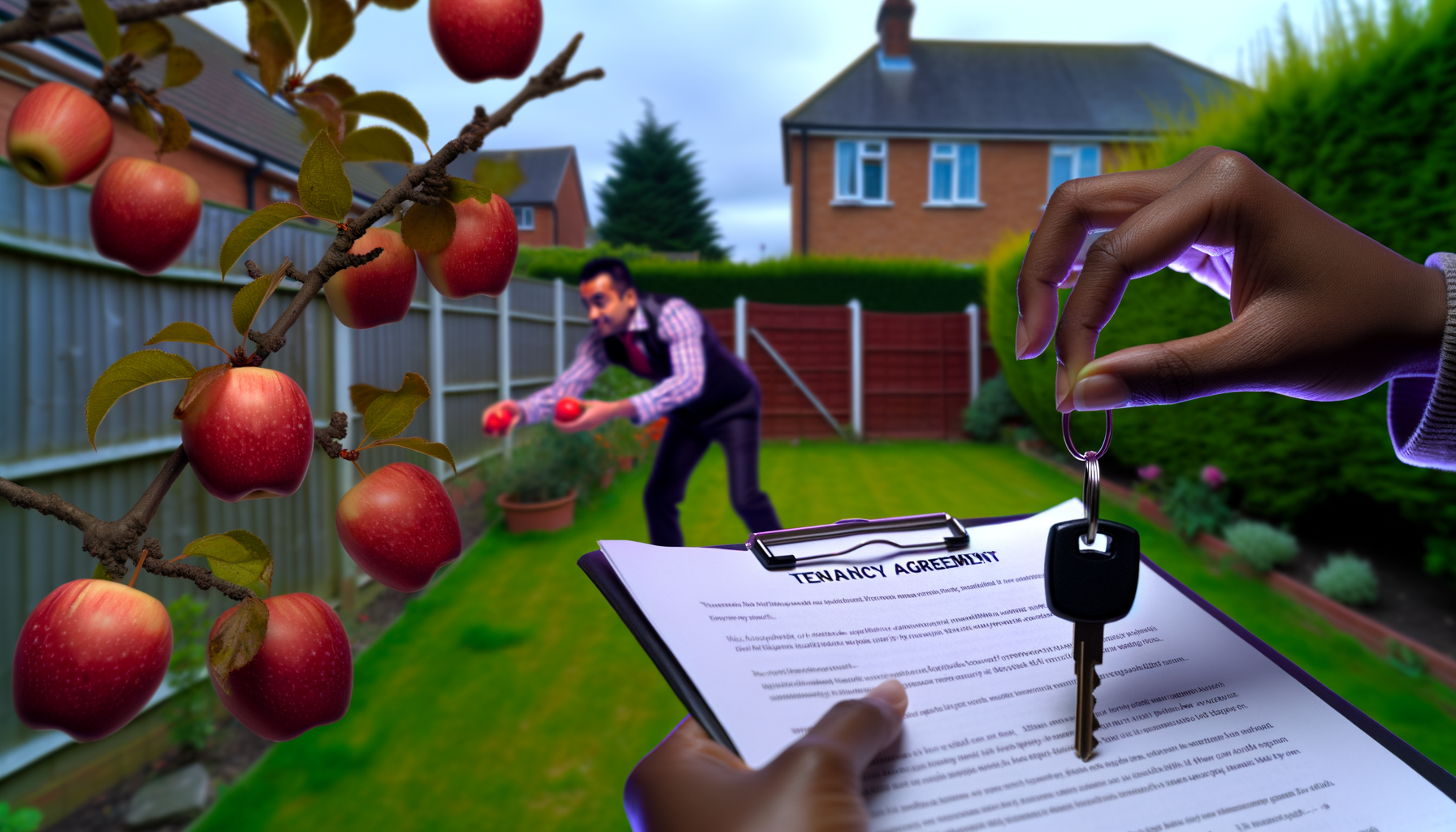
If a fruit tree grows in your backyard, can your landlord pick from it without asking? It may seem like a simple question about property and rights, but in reality, it’s a legal grey area that touches on tenancy agreements, property law, and even the cultural understanding of land use. As more tenants grow fruits and vegetables—either for sustainability, supplementing food budgets, or simply as a hobby—the issue of who has access to that produce is becoming increasingly relevant and sometimes contentious.
In recent years, tenants have started reporting landlords entering rental properties’ gardens to harvest fruits such as mangoes, papayas, bananas, and more. While landlords may believe they’re within their rights as property owners, tenants often feel this is a violation of their personal space and autonomy. This article explores the legal, ethical, and practical questions surrounding this emerging issue of whether landlords can legally enter a rented property’s garden to pick fruit—and what tenants need to know to protect their rights.
Key facts at a glance
| Issue | Landlord’s access to tenant’s garden for picking fruit |
| Applicable Law | Tenancy agreements, property law, and trespassing rules |
| Status of Garden | Considered part of leased property unless stated otherwise |
| Tenant Rights | Exclusive access to leased premises including garden |
| Landlord Entry Rules | Notice is generally required for any property access |
| Fruit Ownership | Fruits are part of tenancy unless stated otherwise in contract |
| Resolution Options | Discussion, mediation, or legal counsel |
Why garden access is legally sensitive territory
In most standard residential leases, the garden or yard is included in the tenant’s leased space unless explicitly stated otherwise. That means tenants typically have exclusive possession of both the dwelling and adjoining land, such as gardens and backyards. Consequently, a landlord has no right to enter any part of the leased premises, including the garden, without prior notice or the tenant’s consent.
Unannounced entry into the garden could potentially constitute a breach of quiet enjoyment or even amount to unauthorized trespass. Many tenant protection laws provide strong safeguards against property entry without adequate notice—often 24 to 48 hours in advance—for valid property-related reasons such as inspections or maintenance, not fruit harvesting.
Tenants are entitled to peace and privacy in their rented home, and that includes the garden. Picking fruit from a tenant’s garden without permission crosses both legal and ethical boundaries.
— Andrea Lim, Property Law Specialist
Who legally owns the fruits on the trees?
A central issue is fruit ownership. When a lease includes the garden that houses the fruit trees, fruits are generally interpreted as part of the leased property. Therefore, tenants have legal right to the fruits grown during their tenancy. Exceptions might apply only when the rental agreement explicitly states otherwise or designates certain trees for landlord maintenance or access.
Even if a landlord planted the tree prior to leasing the premises, once the garden becomes part of the rental contract, the tenant holds possession and, by extension, rights over anything naturally produced—unless stated otherwise. As long as the fruit hasn’t fallen and is still growing on the tree, it’s considered attached property and thus belongs to the tenant during lease duration.
Common reasons landlords enter gardens—and when it’s allowed
Landlords might seek access to gardens for reasons ranging from general property maintenance to safety inspections. However, curiosity, aesthetic interest, or desire to pick fruit do not qualify as legitimate reasons for unannounced entry. For legal entry, landlords typically must:
- Provide written notice
- State a valid reason (e.g., pest inspection, repairs)
- Attend at a mutually agreed time
Picking fruit solely for personal consumption rarely meets the threshold of legal access. Unless agreed upon in the lease, this can violate tenancy laws and may expose landlords to claims of trespassing or breach of residential tenancy codes.
What tenants can do if their landlord picks fruit without permission
Should a landlord enter the garden uninvited to harvest fruit, tenants have several avenues for action. The first and most effective approach is open communication. Usually, a candid discussion to clarify boundaries resolves minor disputes. However, if the issue persists or escalates, tenants may lodge a formal complaint with local tenancy authorities or engage in mediation services.
Repeated or aggressive incursions into the garden without notice may justify more formal actions, including:
- Filing complaints citing breach of tenant rights
- Requesting compensation for lost produce
- Seeking deposit deductions or contract termination in extreme cases
Openness and mutual respect are key. But if a tenant’s privacy is repeatedly invaded, the law is on their side.
— Thomas Yeo, Residential Tenancy Advocate
How lease agreements can prevent disputes from arising
Preventing misunderstandings about garden use and fruit ownership begins with a well-written lease agreement. Explicitly stating property boundaries, usage rights, and garden management responsibilities can eliminate confusion. Especially in suburbs where fruit-bearing trees are common, it’s worth specifying:
- Who is responsible for tree maintenance
- Who can harvest and consume the fruit
- Whether the garden space is communal or private
Both landlords and tenants are encouraged to document agreed-upon conditions. Keeping photographs of the garden’s condition at move-in or records of who maintains the space can also serve as valuable evidence if disputes arise.
What legal professionals are recommending
Legal experts emphasize that tenants need to understand their rights thoroughly, while landlords must not confuse ownership with possession rights. The law distinguishes between the landlord’s ownership of the property and the tenant’s lawful possession for the lease term.
Legal possession includes the garden, unless the rental agreement explicitly excludes it. Fruit growing in that space is part of the tenant’s enjoyment rights.
— Sarah Koh, Tenancy Law Consultant
Winners and losers in garden access disputes
| Winners | Losers |
|---|---|
| Tenants who assert their legal garden access rights | Landlords who access gardens without permission |
| Landlords who clarify gardening and fruit rights in lease | Tenants who neglect to report or document unauthorized access |
| Parties engaging in respectful communication | Disputes escalating due to misunderstandings or assumptions |
FAQs on landlord’s access to garden and fruit rights
Can my landlord legally enter the garden at any time?
No. Your landlord must provide adequate notice (usually 24–48 hours) and have a valid reason to enter the rented premises, including gardens.
What can I do if my landlord picks fruit from my garden without permission?
You can first talk to them directly. If the behavior continues, contact your local tenancy authority or file a formal complaint.
Is fruit grown in the garden considered mine as a tenant?
Yes, as long as the garden is included in your leased area and unless otherwise specified in your lease agreement, the fruit generally belongs to you.
What if the landlord planted the tree before I moved in?
It usually doesn’t matter. Possession and usage rights during the tenancy take precedence unless otherwise negotiated in the lease.
How should fruit rights be handled in the lease?
They should be clearly spelled out. Include details about harvest rights, maintenance duties, and allowed uses of garden space.
Can I get compensation for fruit taken without permission?
Possibly. If you can prove damage or repeated unauthorized entry, you may be entitled to compensation or other remedies under tenancy laws.
Are there exceptions where landlords can access gardens?
Yes, but only with notice and for reasons like repairs, inspections, or health and safety requirements—not personal harvesting.
Should I install a lock on the garden gate?
You can, but always check your lease and local regulations before making modifications to the property.