
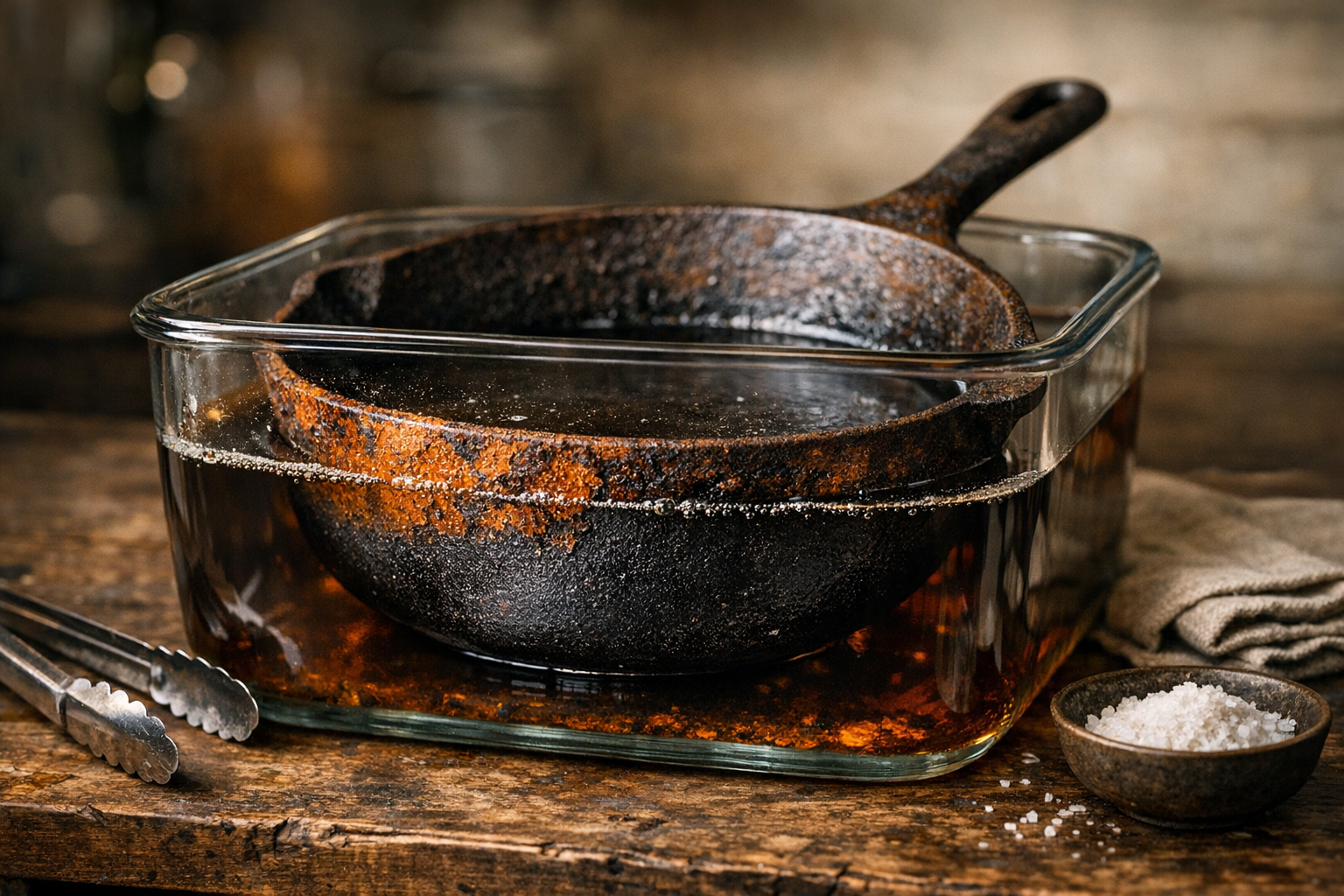
In the age of high-tech non-stick cookware and sleek ceramic pans, the humble **cast iron skillet** has maintained a loyal following among culinary professionals and home cooks alike. Admired for its versatility, heat retention, and longevity, cast iron has one minor downfall: it requires maintenance. Over time, even the most cared-for skillets can become rusty, sticky, or lose that signature black sheen. But recently, a forgotten soaking method has resurfaced—one that promises to restore discolored, flaky, and neglected cast iron to its former glory.
This time-tested technique involves a gentle lye bath and a patient restorative process that not only strips away years of buildup and rust but also leaves the pan ready for a deep re-seasoning. Whether you’ve inherited a generations-old family skillet or found a gem at a flea market, this approach can undo decades of neglect. As many passionate cooks rediscover the magic of cast iron, this restoration method is emerging as a vital tool in cast iron care.
Overview of the Forgotten Cast Iron Soak Method
| Method Name | Lye Bath Soak |
| Primary Purpose | Remove grease, polymerized oil, and layered carbon buildup |
| Time Required | 3 to 7 days |
| Result | Raw, silver-colored cast iron ready for seasoning |
| Risk Level | Medium (requires careful handling of lye) |
| Final Appearance | Smooth black finish after seasoning |
Why cast iron care matters more than ever
Cast iron pans are not just cooking vessels—they’re practically pieces of generational heritage. Unlike modern pots and pans that wear out or warp, a cast iron pan can outlive its original owner. But this promise of longevity comes with an obligation: regular care and occasional deep restoration.
With the rising popularity of vintage cookware collectors, food bloggers, and sustainability-focused cooking, restoring rather than replacing has become a badge of honor. More people are pulling rusted pans from storage or yard sales and attempting to breathe new life into them. Here’s where the forgotten soak method—specifically a **lye bath**—steps back into the spotlight.
What is lye and why does it work so well?
Lye, also known as sodium hydroxide, is an extremely powerful alkaline compound, commonly used in soap-making and drain cleaners. It is highly caustic, meaning it can dissolve stubborn organic matter like baked-on grease and polymerized oils. When applied correctly to cast iron, it cleans without removing any of the metal itself.
The key here is to use **lye safely and in precise proportions**. A mixture of water and pure lye granules creates a powerful soak that envelops the skillet and slowly strips away carbon buildup, burned oil coatings, and decades of food residue layers. This process does not impact the integrity of the iron—only the gunk that coats it.
“Lye doesn’t damage cast iron; it liberates it. I’ve restored pans over 100 years old using this method—it just takes patience and care.”
— Michael Jensen, Cast Iron Collector
How to prepare a lye bath safely
Safety is paramount. Always wear rubber gloves, protective eyewear, and clothing that covers your skin. Work in a well-ventilated area, preferably outdoors. A plastic storage bin with a tight-sealing lid works best for the soak, ensuring minimal exposure to pets, children, or contaminants.
To prepare the soak:
- Choose a **10-15 gallon plastic tub**—avoid metal as lye reacts with aluminum and other metals.
- Carefully fill with 5 gallons of cold water.
- Slowly add 1 pound of 100% lye granules (always pour lye into water, never the other way around).
- Stir gently with a plastic utensil until fully dissolved.
- Fully submerge your pan and cover the container securely.
Let the pan soak for 3 to 7 days depending on how caked-on the buildup is. Occasionally check and carefully brush debris using a nylon brush or scrub pad—never metal.
The crucial difference between lye and vinegar soaks
Many amateur restorers mistakenly turn to **vinegar** or electrolysis for cast iron restoration. While effective for rust removal, vinegar is acidic and will etch into the metal if left too long, weakening the skillet’s natural structure. Lye, on the other hand, leaves the iron intact and simply strips away unwanted coating without touching factory markings, metal etching, or logo details.
The two processes are complimentary. Some restoration enthusiasts use vinegar after the lye bath to deal with mild surface rust, but only with precise timing (30 to 60 minutes max). This is not a required part of the soak method, but a potential finisher before seasoning.
What to do after the soak is complete
After multiple days in the lye bath, your cast iron will look grey and raw—almost like it did the day it was forged. This is exactly the condition needed to begin **re-seasoning**. Follow these steps post-soak:
- Remove the pan using gloves or tongs and rinse thoroughly with warm water.
- Scrub with a degreasing soap to neutralize lye residue and rinse again.
- Dry completely by baking in a 200°F oven for 15 minutes or drying on the stovetop.
- Apply a light seasoning coat (grapeseed or flaxseed oil recommended).
- Bake the skillet at 450°F for one hour—let cool inside the oven completely.
“You’ll know you’re doing it right when the pan starts shifting from dull grey to a deep chestnut black. That’s genuine restoration at work.”
— Carla Reyes, Restored Kitchen Founder
When to repeat the process and how to maintain seasoning
This deep soak isn’t a monthly routine—most pans will only need a **full lye bath once** in their lifetime, unless severely neglected. For regular maintenance, wipe down your pan with oil after each use, avoid harsh soaps, and store it completely dry. If you’re experiencing stickiness or flaking, a light scrub and oven re-season can usually fix the issue without starting over.
Even newly produced cast iron can benefit from a strip and custom seasoning. Many manufacturers season their pans for mass production, using thick layers that aren’t always optimal. Starting from the bare metal gives you full control over the finish quality and durability.
No losers—only restored legends
| Winners | Why |
|---|---|
| Vintage skillet owners | Can fully restore valuable cookware to pristine condition |
| Home cooks and chefs | Gain a non-stick, durable pan with natural seasoning |
| Eco-conscious consumers | Reduce waste by refurbishing instead of replacing |
Frequently Asked Questions
Is lye safe to use for cookware restoration?
Yes, when handled properly. Always wear safety gear and mix carefully. Lye should never come into direct contact with skin and must be fully neutralized before cooking use.
Can I do this indoors?
It’s best to do the lye soak in a garage or outdoor space. Lye fumes can be harmful, and spills indoors pose a risk to surfaces and people.
What kind of lye should I buy?
Use pure 100% sodium hydroxide lye—usually found in hardware stores or marketed for soap making. Always check the label.
How will I know my pan is completely clean?
A properly cleaned pan will have a silvery matte finish—free of grease, black buildup, and food residue. It should feel smooth to the touch.
Can I combine the lye bath with a vinegar soak?
Yes, but use vinegar only after cleaning, for short periods (under one hour) to remove any light rust. Extended exposure may damage the iron.
What oil is best for seasoning after restoration?
Many experts recommend high-smoke point oils like grapeseed or flaxseed. Apply thinly, bake at 450°F, and repeat two or three times for a durable layer.
Does this method work on Dutch ovens or griddles?
Absolutely. Any cast iron cookware, including Dutch ovens, cornbread pans, or griddles, can benefit from a deep lye soak.
How often should I repeat the soak method?
Only if the pan is covered in carbon buildup or if previous restorations have failed. For routine upkeep, seasoning maintenance is usually enough.