
Flexibility plays a much bigger role in daily comfort than most people realize. Tight muscles can affect posture, limit movement, and lead to long-term discomfort. With modern lifestyles involving long hours of sitting, less movement, and high stress, flexibility naturally decreases over time. Yoga is one of the safest and most effective ways to restore flexibility because it stretches muscles gently while improving breathing and body awareness.
Unlike aggressive stretching, yoga focuses on slow and steady progress. You do not need to be flexible to start. With regular practice, yoga helps lengthen muscles, improve joint movement, and reduce stiffness without placing stress on the body. Below are five yoga exercises that are especially helpful for improving flexibility and supporting long-term mobility.
1. Downward Facing Dog – Full Body Stretch
Downward Facing Dog is one of the best yoga poses for overall flexibility. It stretches the shoulders, spine, hips, hamstrings, calves, and even the feet.
Start on your hands and knees. Lift your hips upward and back to form an inverted V shape. Press your hands into the mat and allow your heels to move gently toward the floor. Keep a slight bend in your knees if your legs feel tight.
This pose lengthens the spine and opens the back of the body, making it ideal for improving total-body flexibility.
2. Standing Forward Bend – Release Back and Legs
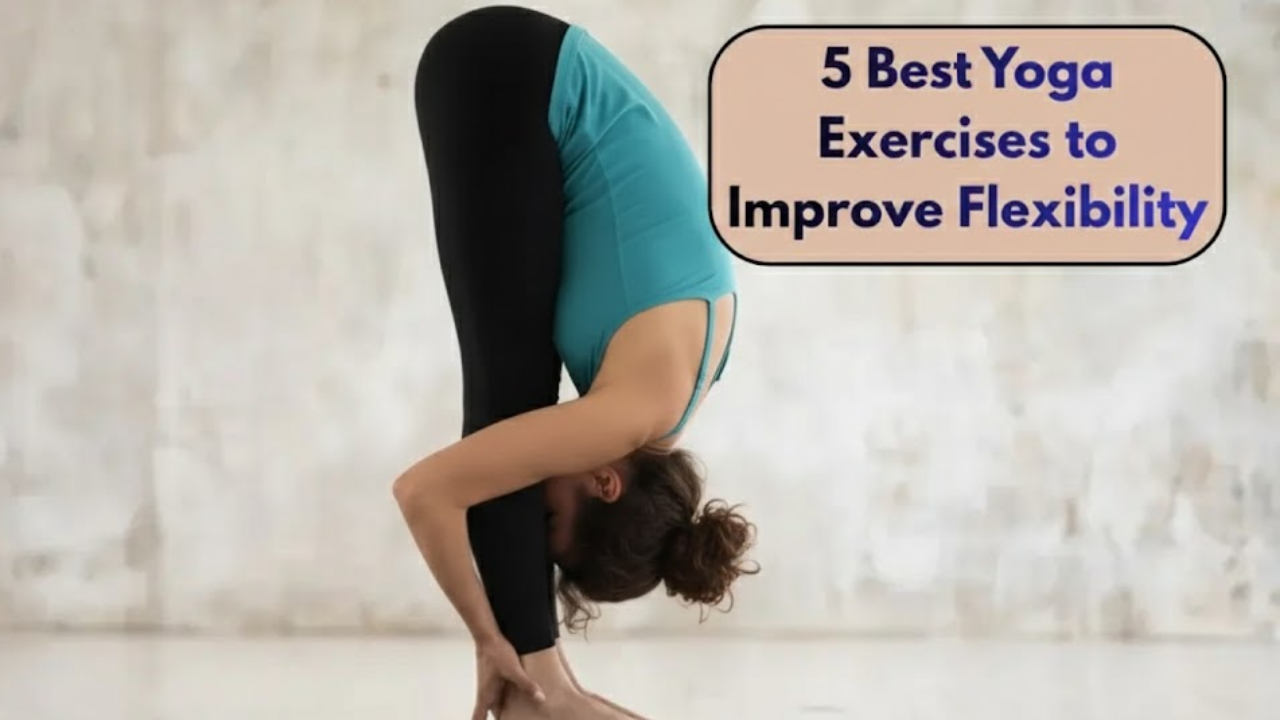
Standing Forward Bend deeply stretches the back, hamstrings, and neck—areas that often tighten from poor posture and sitting too long.
Stand tall and inhale. As you exhale, bend forward from the hips and fold your upper body toward your legs. Let your head hang heavy and relax your neck. Slightly bend your knees if needed.
This pose slowly loosens tight muscles and encourages better blood flow, helping flexibility improve safely.
3. Seated Spinal Twist – Improve Spine Mobility
Flexibility is not only about muscles. Joints, especially the spine, also need to stay mobile. Seated Spinal Twist improves rotation and keeps the spine healthy.
Sit with your legs extended. Bend one knee and place the foot across the opposite leg. Twist gently toward the bent knee, keeping your spine tall. Breathe deeply and switch sides.
This pose supports spinal flexibility and reduces stiffness in the back and core.
4. Butterfly Pose – Open Hips and Inner Thighs
The hips store a lot of tension, especially in people who sit for long periods. Butterfly Pose targets the hips, inner thighs, and lower back.
Sit on the floor and bring the soles of your feet together. Let your knees fall outward naturally. Hold your feet or ankles and gently lean forward while keeping your spine long.
With regular practice, this pose increases hip flexibility and improves comfort in daily movements.
5. Cobra Pose – Stretch the Front of the Body
Cobra Pose stretches the chest, abdomen, and hip flexors—muscles that tighten from slouching and long sitting hours.
Lie on your stomach with hands under your shoulders. Inhale and gently lift your chest while keeping your hips on the floor. Avoid forcing the movement.
This pose improves spinal flexibility and helps correct rounded posture.
Why Flexibility Matters
Flexibility is not about performing difficult poses. It helps reduce muscle tension, prevent injuries, and support smooth daily movement. Flexible muscles and joints improve balance, coordination, and overall comfort.
Yoga improves flexibility gradually, which makes the results last longer. Combined with slow breathing, it also reduces stress and mental tension.
How Often Should You Practice?
Consistency matters more than long sessions. Practicing these poses four to five times a week can bring noticeable changes within a few weeks. Even ten to fifteen minutes per session is enough if you stay regular.
Never force your body. Flexibility improves best when muscles are relaxed and breathing stays calm.
Tips for Safe Flexibility Training
Always warm up gently before deeper stretches. Breathe slowly and avoid bouncing. Every body is different, so progress will happen at your own pace.
Comfortable clothing and a soft mat also make stretching easier and more relaxing.
Final Thoughts
Flexibility is a lifelong journey, not a quick target. These five yoga exercises offer a simple and balanced way to become more flexible while improving overall well-being. With patience and regular practice, your body will feel lighter, more open, and easier to move every day.